Experience the UNESCO World Heritage Aztec Ruins
Among the many astonishing things that can be enjoyed and explored in the American Southwest is the Aztec Ruins National Monument, a major Ancestral Puebloan ruins located in Aztec that dates back to the 12th century - some 900 years ago.
This 27-acre site, located near the banks of the Animas River, is so significant that in 1987 it was designated with the prestigious UNESCO World Heritage Site title, awarded by the United Nations Educational, Scientific and Cultural Organization because of its special cultural or physical significance. In the United States, there are only 24 UNESCO Sites, a list that includes the Grand Canyon, Yellowstone National Park, Carlsbad Caverns National Park and the Statue of Liberty.
Constructed primarily of stone and mortar - plus pine, spruce, fir, pinon, juniper and aspen tree trunks carried in from as far away as 30 miles, the ruins consist of an integrated network of massive masonry and “apartment” houses. The main West Ruins covers two acres, once standing three stories high and containing approximately 500 rooms.
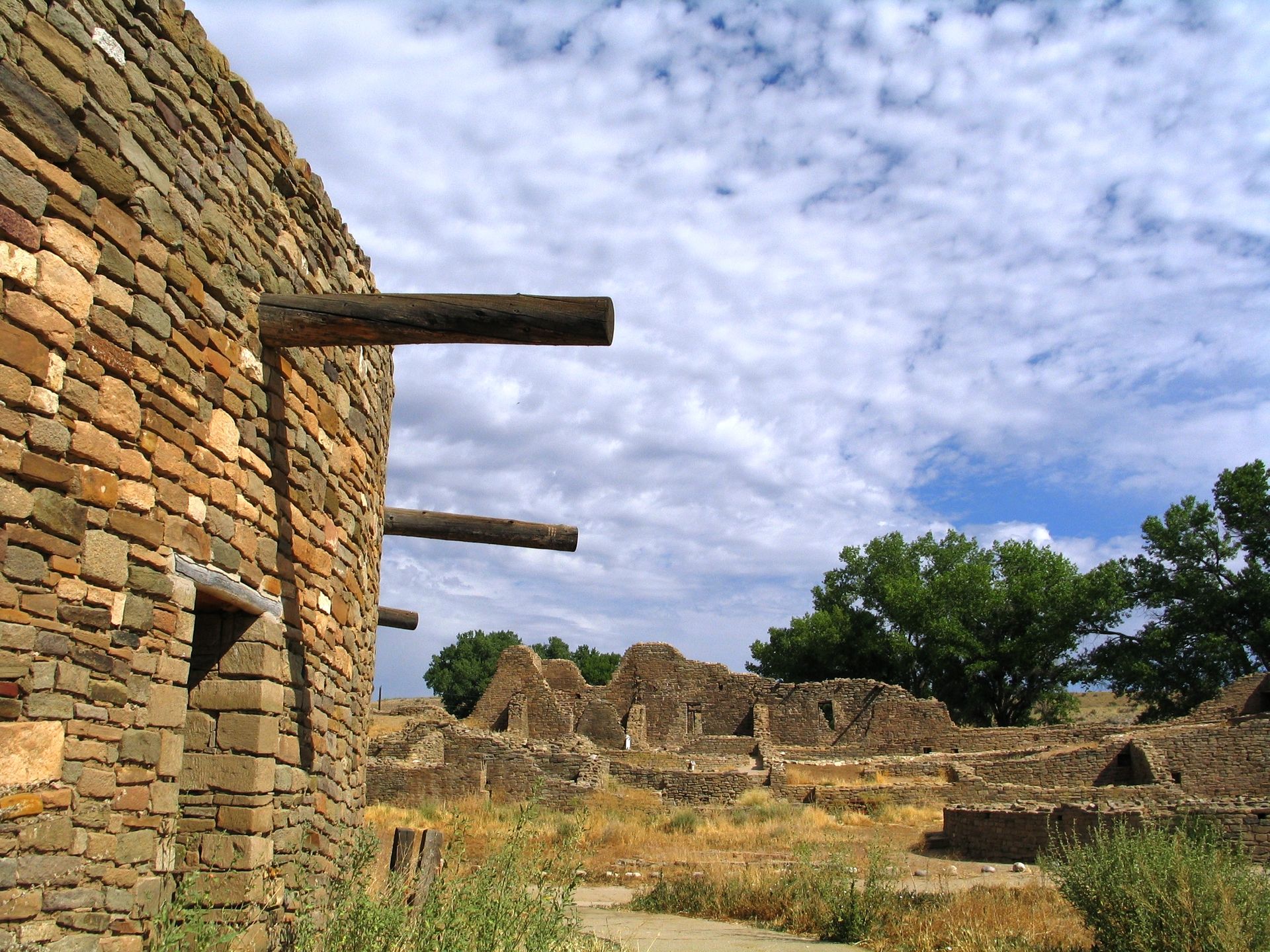
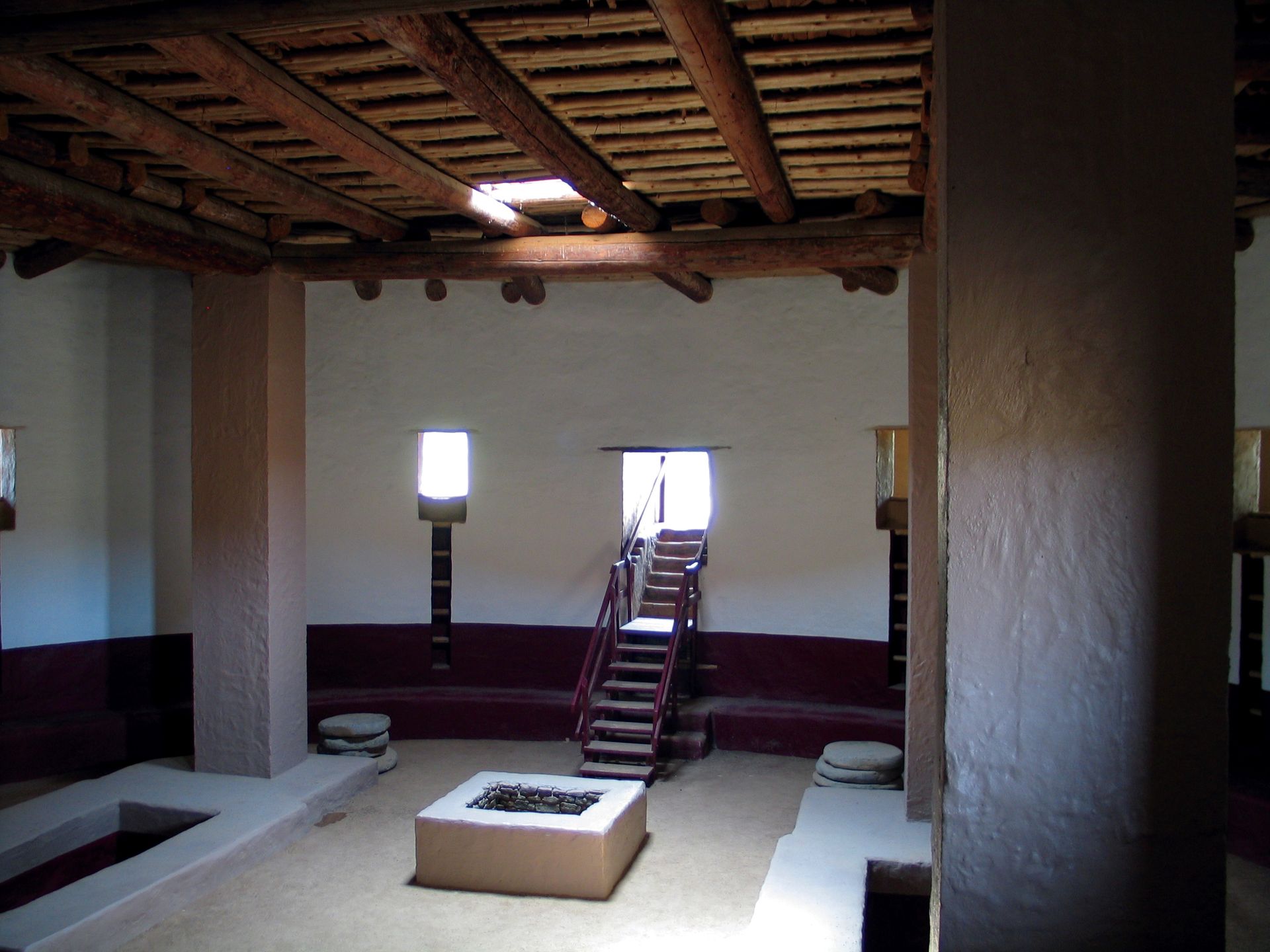
Dominating the site is a Great Kiva, an important enclosed chamber that, as the core of the community, likely was used for ceremony, social interaction and council. At the Aztec Ruins, this building is unique because it is the largest reconstructed “great kiva” anywhere.
Evidence indicates the builders were closely related to the same ancestral people that built what is now Chaco Culture National Historical Park in northwest New Mexico and Mesa Verde National Park in southwest Colorado. Incidentally, both of these places are also UNESCO World Heritage Sites.
For approximately 200 years, Aztec Ruins, Chaco Culture and Mesa Verde provided a vital “regional triangle” for ceremonies, trade and political activity. The people were linked by an elaborate system of carefully engineered and constructed roads, some of which can still be traced.
Ancestral Puebloans, whose descendants include the Zuni, Hopi, Acoma, and Pueblo people of the Rio Grande River New Mexico reached their peak around 1100 A.D. Approximately 200 years later the entire area was abandoned, possibly because of a 23-year drought that began in 1276, and/or due to exhausted resources. The area was not used extensively again until the 1500s with the arrival of the hunting/ gathering Navajo from the north.
European explorers came upon the site in the summer of 1776 when Spanish friars Francisco Atanosio Dominquez and Francisco Velaz de Escalante were seeking a shorter overland route from Santa Fe to California.
Nearly 140 years later, famed archaeologist Earl Morris conducted excavation work of the ruins from 1916 to 1921, collecting nearly 6,000 artifacts, the bulk of which are housed at the American Museum of Natural History and laying the groundwork for the National Park Service’s restoration of the site that began in the 1930s.
The Aztec Ruins became a national monument when President Warren G. Harding signed the legislative bill on Jan. 24, 1923.
Fun Fact: Hollywood’s charismatic and dashing Indian Jones character - played by Harrison Ford in several Steven Spielberg blockbuster movies - is based on the real-life persona of Morris, who in 1934 returned to the Aztec Ruins to reconstruct the Great Kiva. Morris’ work in Aztec is commonly regarded a major accomplishment that has helped millions of park visitors gain a firsthand understanding of the Ancestral Puebloan’s mysterious way of life.