
EXPLORE AZTEC
Discover Aztec, New Mexico, where history, culture, and landscapes come alive. Explore must-see spots like the Aztec Ruins National Monument with our blog as your guide.
The Aztec Tourism Department offers free information to help plan your seamless,
adventure-packed trip to Aztec and the Four Corners region!

Community spirit can move mountains. In Aztec, New Mexico, it moved enough earth to build a 19-mile highway. This is not a local legend, but a historic achievement that put a small town on the national map. In 1963, because of an unparalleled display of grit and unity, Aztec was named an All America City—an honor earned through the sweat, determination, and collaborative will of its people. The story begins with a challenge: a new, $42 million federal project, the Navajo Dam, was rising just beyond the town's reach. This major component of the Upper Colorado River Storage Project promised immense opportunity, but Aztec lacked a direct road to get there. Faced with the choice of waiting for government funds or taking action, the community chose action. They decided to build the road themselves. An Unprecedented Task On January 6, 1963, dignitaries, including New Mexico Governor Jack Campbell, gathered for a festive groundbreaking. The goal was ambitious, to say the least: construct a two-lane, 19-mile highway connecting Aztec to the new dam. What made the task truly legendary was the timeline and the resources. The road was to be designed, funded, and built almost entirely by volunteers, without government support. What followed was an extraordinary mobilization. The project became a town-wide mission, uniting residents from every walk of life. It was a testament to what can be accomplished when a community shares a single, focused goal. A Community United Building a modern highway is a massive undertaking. For the people of Aztec, it required a level of cooperation that became the stuff of legend. Approximately 3,000 volunteers stepped forward—nearly 75 percent of the town's population at the time. This wasn't just a handful of people; it was a movement. Donated Resources: Local businesses contributed heavy equipment, materials, and supplies. Cash donations were collected to fund the effort. Grassroots Fundraising: The fundraising efforts were as creative as they were essential. Civic groups organized rallies that echoed the war bond drives of the 1940s. Even the town's youth got involved, with schoolchildren staging plays to raise money for the road fund. Volunteer Labor: The most critical resource was the people themselves. Residents dedicated their free time, weekends, and energy to the physical labor of construction. Community Support: A dedicated committee, led by resident Bonnie Walls, ensured the workers were cared for. Come snow or shine, they served meals every single day, fueling the volunteers who were building the town's future. In a stunning display of efficiency and resolve, the road was completed on April 21, 1963—just over three months after it began. The highway, later valued at $250,000, was a marvel of private initiative and community collaboration. The Farmington Times praised it as "a marvelous display of what can be accomplished through private initiative and resourcefulness, through voluntary cooperation of people at the grass-roots level.”


Among the many astonishing things that can be enjoyed and explored in the American Southwest is the Aztec Ruins National Monument, a major Ancestral Puebloan ruins located in Aztec that dates back to the 12th century - some 900 years ago. This 27-acre site, located near the banks of the Animas River, is so significant that in 1987 it was designated with the prestigious UNESCO World Heritage Site title, awarded by the United Nations Educational, Scientific and Cultural Organization because of its special cultural or physical significance. In the United States, there are only 24 UNESCO Sites, a list that includes the Grand Canyon, Yellowstone National Park, Carlsbad Caverns National Park and the Statue of Liberty. Constructed primarily of stone and mortar - plus pine, spruce, fir, pinon, juniper and aspen tree trunks carried in from as far away as 30 miles, the ruins consist of an integrated network of massive masonry and “apartment” houses. The main West Ruins covers two acres, once standing three stories high and containing approximately 500 rooms.
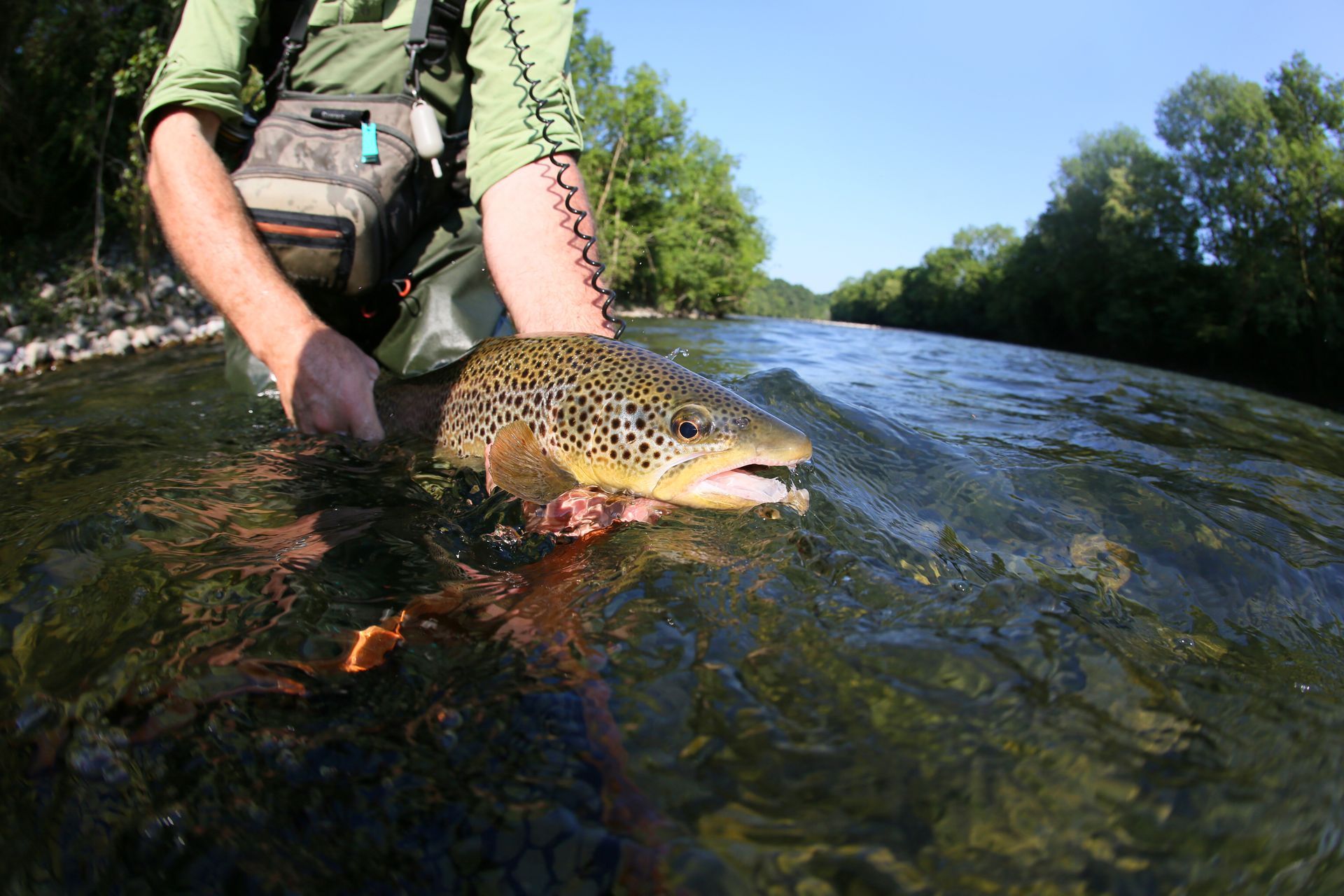
Sensational trout fishing is experienced virtually the entire length of the San Juan River in northern New Mexico, however on one particular stretch, a 4.5 mile expanse located immediately below Navajo Dam, the river has earned world-class “Quality Waters” status due to its extraordinarily ideal year-round temperatures and singular riparian habitat. In fact, studies have shown the Quality Waters of the San Juan River teem with an estimated 80,000 rainbow, brown and cutthroat trout that average 17 inches in length, with a huge proportion exceeding 20 inches. Local fishermen and women call them “lunkers,” with many regarded as state and national records that are released back into the river’s crystal-clear depths. The first quarter mile of the river, immediately after the dam, is designated as a Catch & Release area. All hooks must have barbs removed, flies and lures must be artificial, and every fish must be returned to the river regardless of size. After that and for the next four miles, fishing still mandates artificial flies and lures with barbless hooks, but regulations allow a one-trout-limit… and only if the fish exceeds 20 inches.
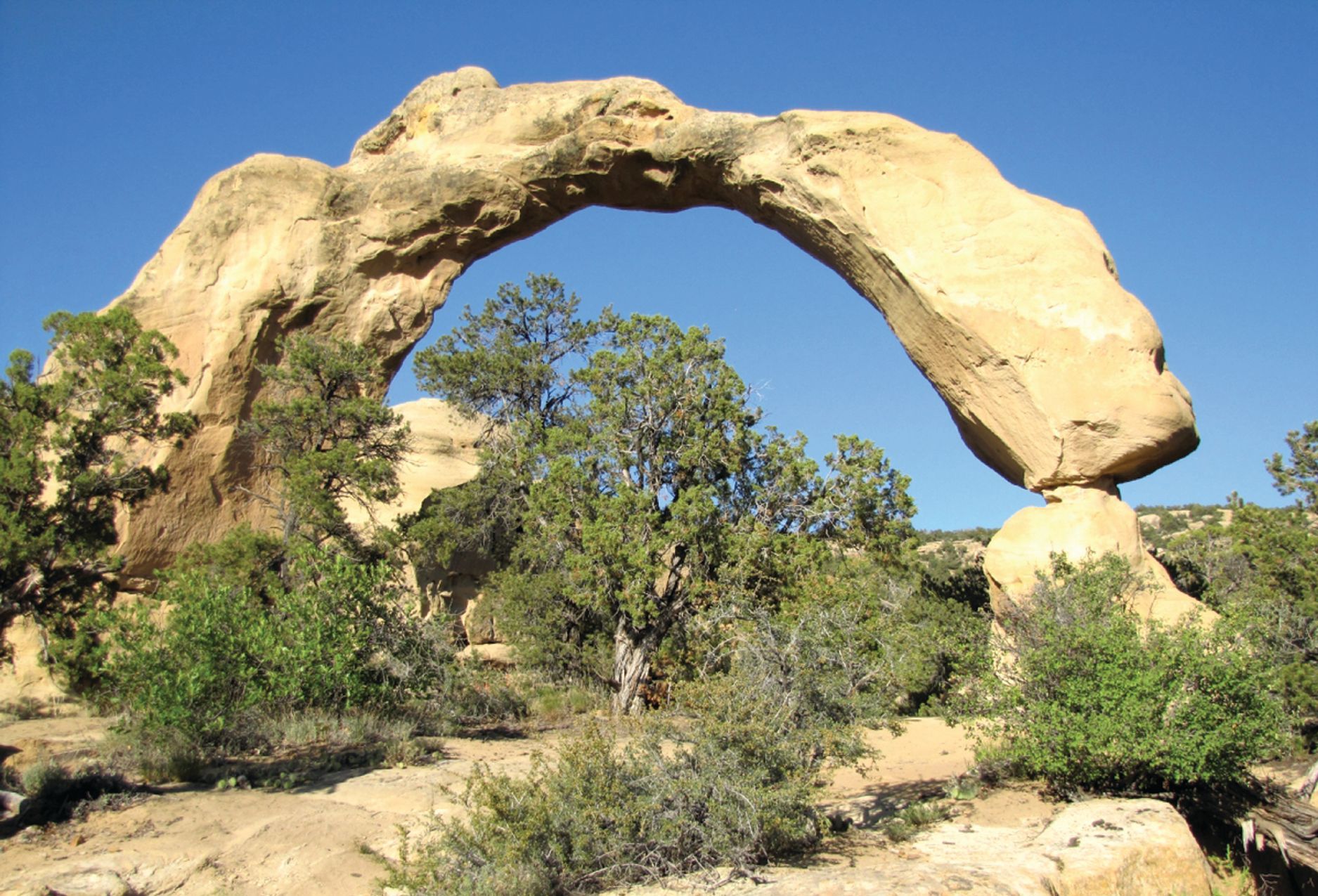
There are so many extraordinary things about Aztec, including fabulous events, top-shelf recreation, enviable climate, rich history and eclectic, small-town pleasures. Yet there is one Aztec asset few visitors know very much about: the massive collection of nearby sandstone arches. So far, more than 300 arches of varying size have been discovered, and every single one is within an hour’s drive of Aztec. Some are no larger than a basketball (windows), while others are big enough to walk through. And several, quite sadly, are destined to last for a very short time due to erosion. Falling arches are part of nature’s natural cycle.